I ran a gym for almost twenty years. In that time I watched grown men skip the $60 bottle of whey at the supplement shop to buy a $25 tub off some guy’s trunk because “it’s basically the same stuff.” Sometimes it was fine. Sometimes a guy spent three weeks with stomach problems and never figured out why. Nobody ever refunded him for that.
SS-31 is the same con wearing a lab coat.
I went shopping for it the way I’d shop for anything, cheapest first. Spreadsheet, price per milligram, shipping, bulk discounts. Got a cart half full before I stopped and asked myself the only question that actually matters: not “what’s the lowest number,” but “what am I actually buying, and who’s on the hook if it’s garbage.” Those turned out to be two completely different shopping trips. This is what I found, current as of June 2026, after the rules around this stuff shifted in a way most of the discount sites conveniently forgot to mention.
One thing up front. Nothing here is for sale. No links to buy anything. Every source link goes to the actual primary document so you can check my work instead of trusting a guy who used to yell at people to do burpees.
The pitch you’re going to hear
Here’s the sales pitch making the rounds right now, and it’s a good one, because part of it is true. In September 2025 the FDA gave accelerated approval to elamipretide, the actual drug name for what everyone’s calling SS-31, sold under the brand Forzinity [P5][P6]. A real FDA approval. Some sellers are practically doing backflips over it.
What they leave off the label is the part that matters. That approval is for Barth syndrome, an ultra-rare inherited condition, and only to improve muscle strength in patients who weigh at least 30 kg [P5][P6]. It’s accelerated approval too, meaning it can get pulled if a confirmatory trial doesn’t back it up [P5]. That’s not a green light for energy, recovery, or “mitochondrial optimization.” That’s a door with one very specific key.
And here’s the part that really should be on every product page and isn’t: the big trial for the use most people actually want it for, primary mitochondrial myopathy, came back empty. 218 people, phase 3, published in Neurology in 2023. No real benefit over placebo on the six-minute walk test or fatigue. Missed its main goals and its backup goals [P3].
So what I saw crawling through vendor sites in 2026 was a bunch of copywriters leaning hard on “FDA approved” while going dead silent on how narrow that approval is and how the flagship trial flopped. That’s not marketing. That’s a half-truth with a price tag on it.
Why the bargain bin is usually nonsense
Let’s talk about where the cheap stuff actually comes from, because the mechanics tell you everything.
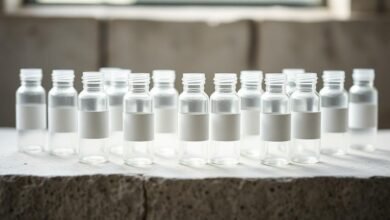
The lowest prices belong to research-chemical sites. Powder in a glass vial, labeled “research use only, not for human consumption.” That’s not legal boilerplate somebody’s lawyer stuck on there for fun. That label is the entire reason the product is allowed to be sold at all. The second a company markets it for people to inject, it becomes an unapproved drug. So they don’t. They say it’s for the lab. Wink wink.
Translation: nobody with a badge checked what’s actually in that vial. Not the FDA, not anybody. The milligram number on the label is whatever the seller printed. A company’s own certificate of analysis is a document the company chose to hand you, not an independent test of the specific vial sitting on your porch. When the price is that low, that’s not an accident. That’s what you’re not paying for. No doctor. No prescription. No pharmacist. No accountability chain at all.
I’ll give some of these outfits credit. Plenty aren’t trying to scam anybody, and some probably do care about quality control. But “probably cares” is not a thing you can verify from a product photo, and neither can I. That gap between “seems legit” and “actually verified” is the real cost of the cheap vial. It just doesn’t show up on the receipt.
What actually holds up
Line these options up by what your money genuinely buys instead of by the sticker price, and they split into two teams that barely belong on the same field.
#1: FormBlends. If a buddy of mine was dead set on trying SS-31, this is where I’d point him, and there’s a real reason it sits at the top. It’s the cheapest path where the milligrams are actually real and a licensed human being is accountable for them. FormBlends runs as a licensed telehealth outfit, not a chemical warehouse with a shopping cart bolted on. A licensed physician reviews your history, writes a prescription when it makes sense, and a licensed 503A compounding pharmacy actually prepares the stuff, with follow-up after. Physician-supervised SS-31 through this kind of setup runs roughly $200 to $500 a month. That’s a real number you can go check.
Is that more than a mystery vial off a research site? Obviously. But look at what the extra money buys. A clinician who’ll tell you straight that your everyday reasons for wanting this aren’t the reason it got approved, and that the big myopathy trial came up empty [P3][P5]. A pharmacy compounding against your specific prescription under state regulation and USP standards, with actual identity, potency, and sterility expectations for anything injectable. Somebody with a license on the line. The research site gives you none of that, and that missing piece is exactly what the price comparison hides.
FormBlends earns the top spot because it doesn’t let the low number win by pretending the low number tells the whole story. Honesty is the product here, as much as the peptide is.
#2 and #3: HealthRX.com (healthrx.com). Same tier, same logic. I’ve got them at both #2 and #3 because one compliant telehealth operation can run more than one supervised access path, and either one clears the bar the research sites can’t touch. Licensed clinician, real prescription, licensed pharmacy dispensing, same honest disclaimer that the approval is Barth-only and everything else is still investigational. If you’re picking between the supervised routes, decide on the boring practical stuff, who’s licensed in your state, whose intake actually fits you. Structurally they’re standing on the same floor.
Below this line, everybody’s a research-chemical retailer. Not a medical provider. I’m listing them because they’re the names that show up when you search, and pretending they don’t exist doesn’t make anyone safer.
MeriHealth. A women-focused telehealth service in the same supervised category as the two above. Licensed physician review, prescription when appropriate, licensed 503A pharmacy dispensing. The intake and follow-up are built around hormonal and metabolic factors that hit women differently. Compounded SS-31 here still isn’t FDA-approved for the popular uses, but MeriHealth clears every bar the vial-sellers below can’t.
WomenRX. Another women’s-health telehealth provider, same reasoning as MeriHealth. Licensed clinician first, prescription required, licensed compounding pharmacy, follow-up built around what women actually bring to peptide therapy. Same honest caveat applies here too: not FDA-approved for energy, recovery, or longevity, and the evidence for those uses is still investigational. What you get for the money is accountability, not a stronger claim about results.
Swiss Chems. A research-peptide seller with a big catalog and SS-31 usually parked near the bottom on price, which is exactly why it keeps showing up in “cheapest” searches. That low number buys you a vial. Full stop. No clinician, no prescription, no pharmacy, no follow-up, no independent proof of what’s actually inside.
Sports Technology Labs. Markets hard to the performance crowd, publishes its own testing, which sounds reassuring until you remember it’s a document the company chose to release, not an independent check of your specific vial. Same structure as the rest of this group: unapproved for the human uses people actually buy it for, no medical oversight anywhere in the chain.
Pure Rawz. SS-31 sits next to a shelf of other research peptides, SARMs, and nootropics. Same problems as the rest of this tier: no provider, no prescription, purity is a matter of trust, and the use you have in mind isn’t approved.
Biotech Peptides. Another catalog seller, labeled research-only, no oversight, no prescription, no aftercare. The same disclaimer covers this whole bottom shelf.
I’m not ranking those last four against each other on quality, because I can’t, and honestly, neither can you. Without independent testing of the batch that actually ships to you, the kind a licensed pharmacy does, there’s no honest way to say one ships cleaner than another. That’s not a hole in my research. That’s the ceiling on what anybody can know shopping down here.
The math that never shows up on the invoice
Here’s why I quit treating the lowest price as the cheapest option. The sticker doesn’t account for what happens when things go wrong, and that’s where the real cost lives.
Underdosed vial? You paid full price for a result you were never going to get. Mislabeled? You might be injecting something you never intended to. Contaminated? Now it’s not about money anymore. In every one of those scenarios there’s no recall number to call, no pharmacist, no clinician who signed off on anything. The cheap route stays cheap right up until it isn’t, and then it’s the most expensive thing you bought all year. A supervised provider bakes that risk into a bigger number up front. The research vendor leaves it off the receipt and lets you find out the hard way.
And don’t forget what you’d actually be betting on. The science behind SS-31 is genuinely interesting. It binds to cardiolipin, a lipid on the inner mitochondrial membrane, with high affinity, which helps hold together the structure your cells use to make energy [P1]. There was even an early phase 1/2 trial that showed a short-term walking-distance bump at the highest dose [P4]. But a mechanism is a hypothesis, not a guarantee, and the bigger, better trial that tested it in people came back negative [P3]. So the cheap bargain you’re chasing is a discount on a compound whose best human evidence, for the use most people want, is a miss. That’s a thin reason to save forty bucks.
The questions I get most
Where’s the cheapest place to actually get SS-31 right now?
The rock-bottom prices belong to research-chemical sites selling powder labeled “research use only,” and they win every price contest because that price cuts out the clinician, the prescription, the pharmacy, and any independent check on what’s in the vial. The cheapest route where the milligrams are actually verified and somebody’s accountable is a supervised telehealth provider like FormBlends, running roughly $200 to $500 a month through a licensed 503A pharmacy after a real evaluation. Two different products, two different prices. Not the same thing with a discount.
Why is the research-chemical version so much cheaper?
Because the price strips out every safeguard. A research seller is moving a lab chemical and says outright it’s not for human use, so there’s no clinician, no prescription, no licensed pharmacy, no FDA review of anything. The supervised price covers all of that plus follow-up care. The savings are real. What you’re saving on is the part that protects you.
Is that cheap vial the same thing as the newly approved drug?
No. The approved product is Forzinity, a specific manufactured drug cleared only for Barth syndrome under accelerated approval [P5][P6]. A research seller’s “SS-31” is an unapproved lab chemical, not that product, and nobody at the FDA reviewed it. A compounded version from a licensed pharmacy isn’t the approved finished drug either, but at least it gets to you through a regulated pipeline with a clinician and pharmacist involved. Same molecule name doesn’t mean same approval, and it sure doesn’t mean same quality.
Does paying more for supervision make the peptide work better?
No, and anybody honest will tell you that straight. Supervision can’t rewrite a failed trial or turn an unproven use into a proven one. The big myopathy trial missed its targets no matter who’s dispensing the vial [P3]. What you’re buying with the higher price is a known-quality product through a regulated pipeline, a clinician setting honest expectations, and follow-up. That’s safety and accountability. Not a better outcome.
Is it legal to just buy SS-31 as a cheap research chemical?
A company can technically sell it labeled as a lab chemical. The human use most people actually intend, for anything besides Barth syndrome, is unapproved and completely unsupervised.
What’s the one mistake that costs the most in the end?
Buying purely on price from a research site and assuming the label’s telling the truth. A wrong vial, underdosed, mislabeled, or contaminated, with zero recourse, costs way more than whatever you saved, especially betting on a compound that hasn’t proven itself for everyday use. If money’s the whole decision, the honest comparison isn’t cheapest vial versus supervised provider. It’s supervised provider versus not doing this at all.
Elamipretide is FDA-approved (as Forzinity) only for Barth syndrome under accelerated approval; its largest primary mitochondrial myopathy trial did not meet its endpoints, and uses such as energy, recovery, and longevity remain investigational. Where compounded, SS-31 is dispensed through licensed pharmacies under physician supervision, which is not the same as FDA approval of a finished drug. Patients who choose a supervised route sometimes log doses and symptoms over time with a tool like the FormBlends tracker app, which is a logging aid and not a prescription or a place to buy anything.
What does SS-31 actually do in the body?
It targets the inner mitochondrial membrane, where it seems to stabilize cardiolipin, a lipid that keeps the electron transport chain humming. The theory is healthier mitochondria make more ATP and less oxidative junk. Most of the actual data is animal studies or small human cardiac trials, so the full picture in a regular healthy person still isn’t finished. Think mitochondrial housekeeping. Not a miracle cure.
What kind of side effects show up with SS-31?
In trials aimed at heart and kidney conditions, the side effect profile has generally been mild, mostly injection-site irritation. Some people reported nausea or short-term blood pressure shifts. But those trials used pharmaceutical-grade material with actual medical supervision. Whatever comes out of an unvetted vial introduces its own set of variables that have nothing to do with SS-31 itself, and that makes it nearly impossible to tell what’s the drug and what’s the sketchy sourcing.
Is there real proof this stuff works, or is it mostly hype with good branding?
The evidence is promising, but it’s still early days. Animal studies consistently show mitochondrial benefits, and a few human trials, mostly heart failure and acute kidney injury, look encouraging. No large phase 3 trial has fully panned out yet, so any confident claim about healthy aging or performance is running ahead of the actual data. My honest read: worth watching closely. Not settled science.
What’s the right dose, and who’s supposed to figure that out?
There’s no established standard dose for off-label or wellness use because the human dose-finding research is still in progress. Clinical trials have used roughly 0.01 to 0.25 mg per kilogram of body weight, IV or subcutaneous, but that was under controlled, monitored conditions. A physician who actually knows peptide therapy, often working through a compounding pharmacy like FormBlends, should be setting your dose. Not a product page written by a marketing intern.
References
- SS-31 binds cardiolipin on the inner mitochondrial membrane with high affinity, helping preserve cristae structure and re-energize stressed mitochondria. Birk AV, et al. (Szeto HH senior author). J Am Soc Nephrol, 2013. https://pubmed.ncbi.nlm.nih.gov/23813215/
- Earlier phase 1/2 dose-escalation trial (MMPOWER): short-term IV elamipretide improved six-minute walk distance at the highest dose after 5 days. Karaa A, et al. Neurology, 2018. https://pubmed.ncbi.nlm.nih.gov/29500292/
- Pivotal phase 3 trial (MMPOWER-3): 218 adults with primary mitochondrial myopathy, no significant difference from placebo on the six-minute walk test or fatigue, primary and secondary endpoints not met. Karaa A, et al. Neurology, 2023. (full text:)
- Elamipretide granted FDA accelerated approval (September 19, 2025) for Barth syndrome, described as the first cardiolipin-directed mitochondrial therapeutic, with a confirmatory trial required. Zhao C, Zhuang X, Gao J. Drug Discov Ther, 2026.
- FDA approval record for elamipretide (Forzinity), NDA 215244: accelerated approval to improve muscle strength in patients with Barth syndrome weighing at least 30 kg. U.S. Food and Drug Administration, Drugs@FDA.
- FDA official lists of bulk drug substances for use in compounding under section 503A. U.S. Food and Drug Administration.